This is my tenth year living in the Cayman Islands. It’s hard to believe I’ve given almost a decade of my life to these beloved isles, and even harder to believe I’m old enough to have lived somewhere new for a decade. I’ve built a life, a family and a career here. I became a man here, became independent here, had triumphs and failures here. This beautiful rock in the middle of the ocean, far from where I was born and all the family and friends I knew, has become home. The road to that decision has been long, confusing and still has an odd feeling of impermanence to it.
Making The Decision To Stay
Like many people who move to and stay in Cayman (kay·muhn) long term, especially accountants, I never intended to be here for longer than eighteen months. I signed up for travel and adventure, and ended up finding so much more. In my fourth year on island I met my now wife, and both of us are convinced it’s the primary reason God brought us here. If it weren't for finding each other, there’s a chance neither of us would still be here. Maybe we should start calling it our love island, that wouldn’t make us insufferable at all.
The Cost
Becoming an expatriate is an odd experience. You’ve left the country where you learnt everything you know, and brought those skills to another country in exchange for better money, adventure, lifestyle, freedom… everyone has their reason. It’s a huge sacrifice regardless of your reason for making it. You give things up, big and small. Like being able to pop over and see your parents for dinner, your favorite breakfast cereal, or a good self deprecating South African joke. That sense of loss has never felt more difficult than during this season with a newborn. Our families came across the world to celebrate her birth with us, but now we’re back on our own. Our support network has shrunk to a few close friends and each other. We keep a close eye on the friend who once suggested putting children in the microwave.
It doesn’t help that a small but loud voice in the local population, lumps all expatriates under one umbrella. Willfully ignoring the unusually high percentage of sought after professionals, the taxes they pay, and the education they’ve earned. Proudly expressing their distaste for their existence. It’s a problem globally today, but the xenophobia feels stronger in places where the expatriate population is larger than the local one, in spite of the clear symbiotic relationship that makes these places work.
Expatriate work permit fees, and customs duties on the goods bought by a largely expatriate population are core incomes for the Cayman Islands Government, helping to fund social services often restricted to citizens. An increased population size also brings the benefits of buying power and servicing that population, allowing local business to flourish and creating opportunities in what would otherwise be a significantly smaller community.
Thankfully I’ve had the privilege to socialize or work with Caymanians who represent the advertised Cayman Kind to the fullest extent. Embracing other cultures while being proud of their own. Lovingly encouraging my talents, and allowing me to learn from and share in theirs. This has helped mitigate the noisy politicking and make this a more welcoming place.
Then there’s the literal cost. The cost of living here which is simply astronomical. The world has become an expensive place, especially felt by the millennial generation with our insatiable need for avocado toast. Cayman, frequently topping the lists of most expensive places in the world to live, takes that to an extreme. Buying fresh fruit and vegetables on a small island often feels like tossing frugality out the window—from the 10th floor.
The Reward
But let me not cry too hard into my Starbucks coffee mug from New York. As my wife and I talk of the future, of the place we want to raise our child using the privileged position our skills have given us to choose where to live, Cayman has a compelling list of positives. Here are five that immediately come to mind:
This is a safe place to live
I have reasonable work life balance with no significant commute to work
The most incredible beaches in the world at our doorstep
No Income Tax (We still pay a smorgasbord of other taxes but this is the big one)
A relatively stress-free, small-town life, with quick access to the big US cities when you need to see some tall buildings
A life with enough space and time for family. So we did it, we took on the long expensive journey. We filled in the paperwork, hired a lawyer to guide us, saved up and paid all the fees, I studied for the test - Cayman History is short but I really enjoyed learning what was covered. Seven months after submission we got the papers. Permanent Residents of the Cayman Islands.
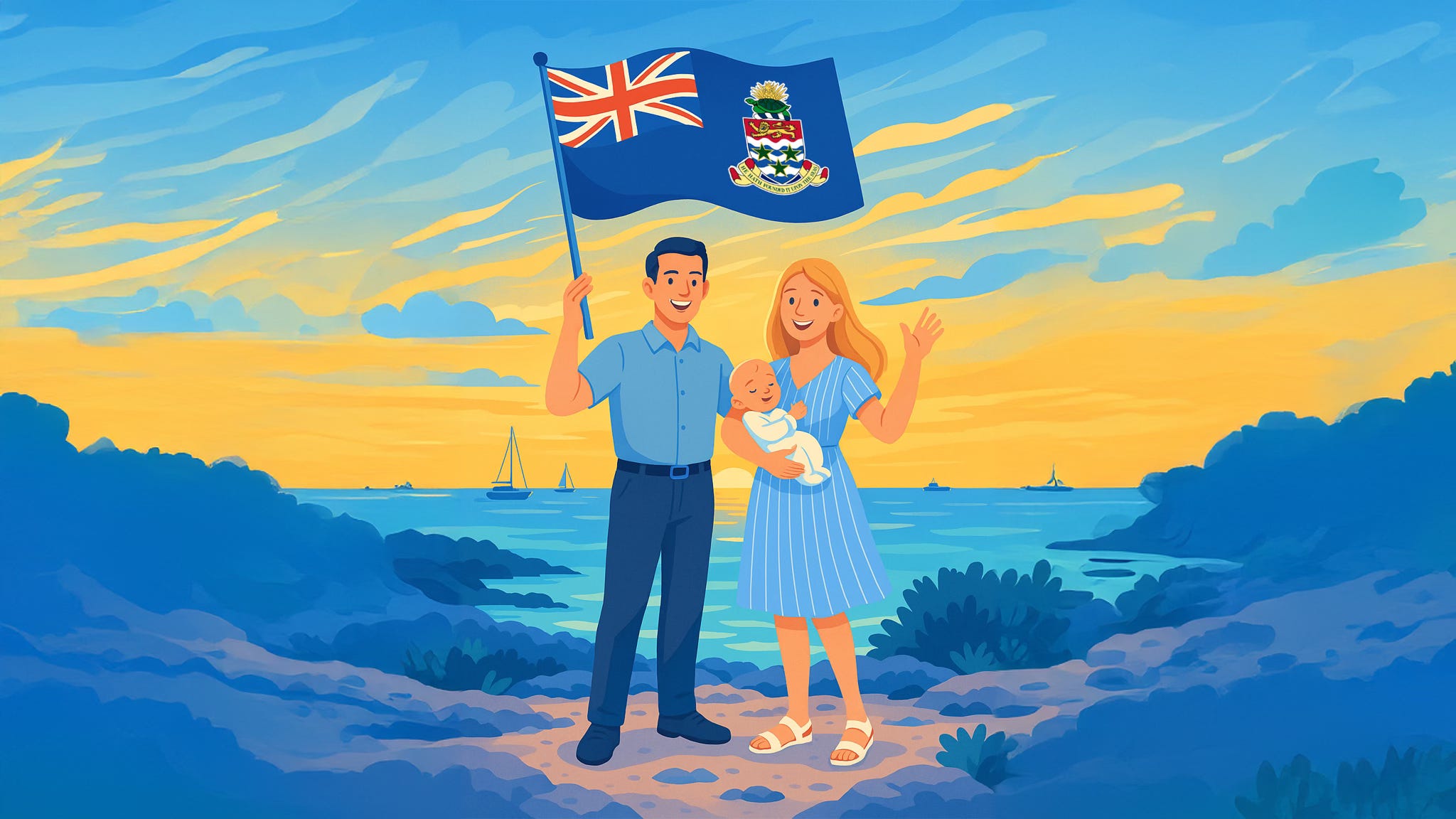
We’re still almost six years away from citizenship. I didn’t think I’d make it this far—so who knows? We may be waving the Cayman flag for a while yet.