


My wife loves to tell people about our first budget meeting as a couple. We sat in a giant bean bag. There was wine to help her get through it and, in her words, ‘I got all bright eyed and bushy tailed,’ as I showed her my elaborate budget.

My budget beginnings
I’ve always enjoyed playing Monopoly personal budgeting. As a kid I’d do chores for my parents and painstakingly record them in a notebook, charging them for each completed chore. Born to be an entrepreneur, but cursed with the risk-averse personality of an accountant. If I picked up ten dog poops in a week at ten cents each, that’s R1 for the week and one step closer to a new Lego set.
The R is a symbol for Rand - the currency of South Africa. So like the dollar but worth less. South Africa is a country, on the African continent, in the south of it… you get it.
I’ve found other people don’t have quite the same passion for tracking and planning their finances as I do. A friend once described their money management plan as, ‘if there is enough money in my bank account to pay for it, I can have it.’ Naturally I spat out my drink.
Why budgeting is important
Tracking where your money goes is an essential part of keeping it under control - and keeping your obsessive-compulsive tendencies at bay. Businesses report where their money comes from and what it gets used for in order to assess their success over a period of time. The stock market then ignores that information and throws money at them because the CEO is a crazy, charismatic individual who will defy the odds and make them rich. It’s not gambling, it’s math and science. Maybe this isn’t a good example.
Having a good knowledge of how your personal finances are being used can set you up for success in the future. See where you have breathing room to spend. Maybe it’s time for a date night? Or see where you can trim things down. Do you really need that expensive adult Lego set? You do? OK, why don’t you cut back on soap this month, who needs that?
Today you don’t have to be an Excel wizard - a title I used to have on my LinkedIn profile before my wife laughed at me - to be able to budget. There are all kinds of fantastic apps that can take care of all the hard work for you and make the whole process super simple. If you bank with a great bank they may have a built-in one, or you can use your own. I personally got rid of those tedious Excel spreadsheets and now use an app called YNAB (You Need A Budget)1.
Before we get into it, it’s important to note that budgeting looks different at different income levels and stages of life. If you are in debt, maybe your budget will focus on getting out of debt. Maybe you just want to stop living paycheck to paycheck. Or if you have a lot of excess, maybe it will focus more on investments. Focus on where you are at, and where you want to be. Don’t worry about the guy in the fancy car at the traffic light, it’s probably the bank’s car anyway.
How I like to budget
OK, I’m about to talk about how I do this budgeting thing, try to stay with me. You’re welcome to pour yourself a gin and tonic if it’ll make this go down easier, I’ll wait…
You only get paid so much money each month,
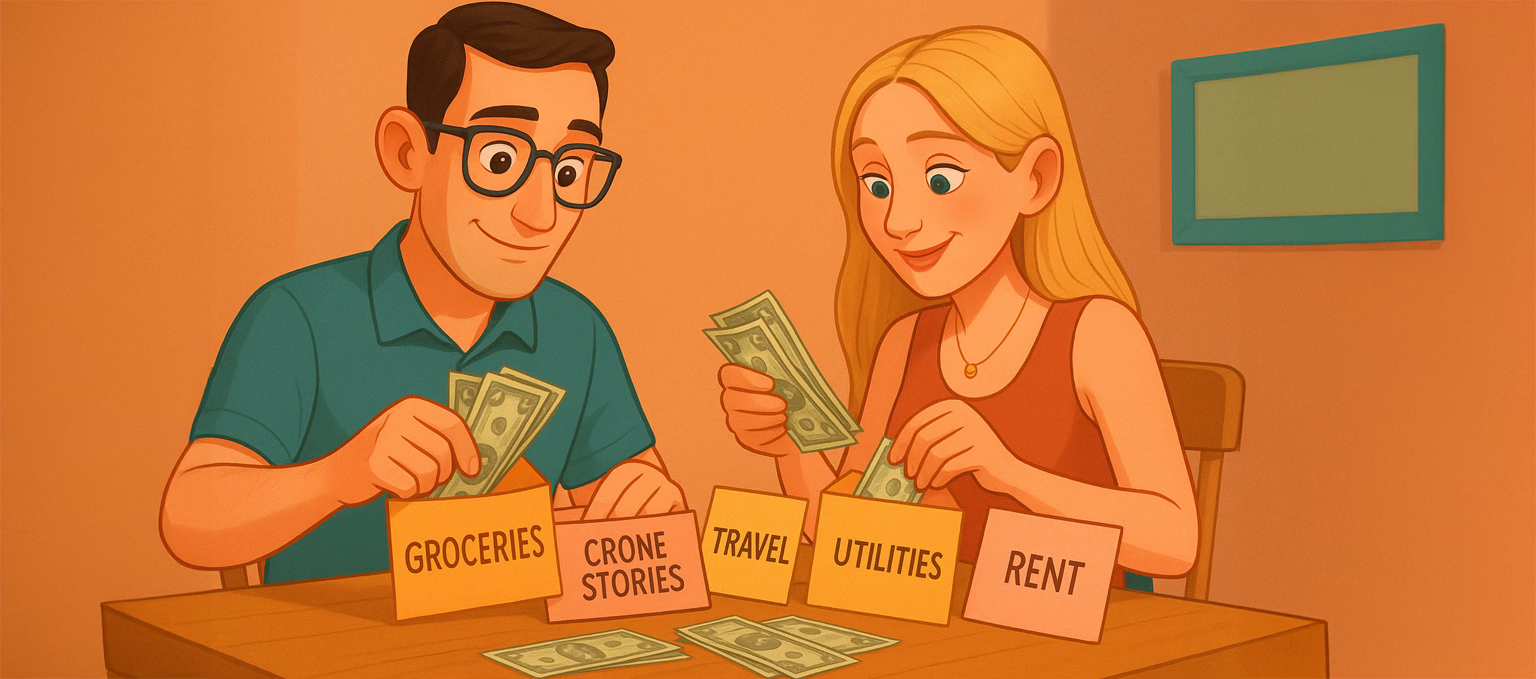
That money needs to cover some essential things like food, water, shelter, debt, and Lego. The envelope budgeting method is where you take the money you earned and put it in different envelopes that should only be used for that purpose. So you put some money in the food envelope for example. When you go grocery shopping you take the money from that envelope to pay for things. When the money starts to run low it’s two-minute noodles until payday. YNAB uses the digital version of the envelope method.
Once you’ve allocated your income into each of these essential digital envelopes, if there’s any left, you can split that among saving for the future: emergency funds, mortgage down payment, car services. Then the good things in life: eating out, vacations, a new phone. If there’s no money in that ‘envelope’ you don’t have money for that thing.
I made the grave error of telling my wife that our budget can be flexible, she reminds me of that at least once a week. What I meant was if you really do run out of grocery money, you can reallocate some of the money you had set aside for a less essential thing like eating out so you can have the avocado you deserve.
Planning for the future
Organising your finances in this way helps you build a discipline around covering important things first, and not spending money you don’t really have. Avoiding bad debt and building a buffer for when life throws you lemons. Yes you may be blessed to have money in your bank account, but that money may be better saved towards new tires on your aging car than another outfit for your already overflowing closet. You still look good in that fit you bought last year, work it until it’s vintage and then work it some more
Budget with an end in mind
The little high you get when you have a shiny new thing is hard to resist, so having a budget with your true long-term goals guiding your spending can keep you on track to build the life of your dreams. That doesn’t mean you can’t have nice things, just make sure the Lego budget line is filled after you’ve paid your electricity bill so you don’t have to build in the dark. You don’t need to compete with the Instagram Influencers buying gold toilets with their Bitcoin. A happy life is one free of debt and financial stress, start there. Happy budgeting.
This column was not sponsored by Lego. But if someone from Lego ever reads it, let’s talk.
Signing up to YNAB using my referral code will provide you with a free month, and if you like the service and continue to use it - I will get a free month too.